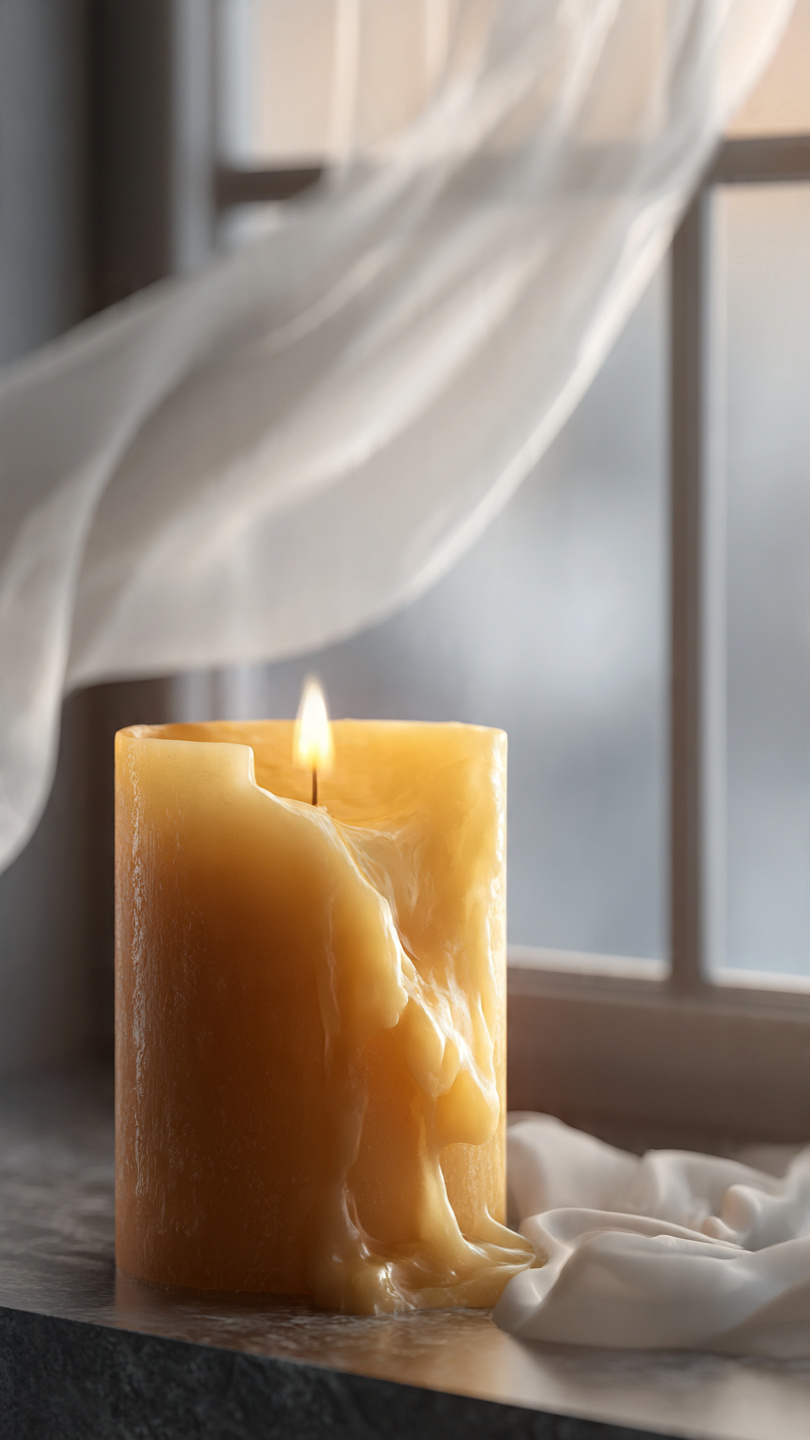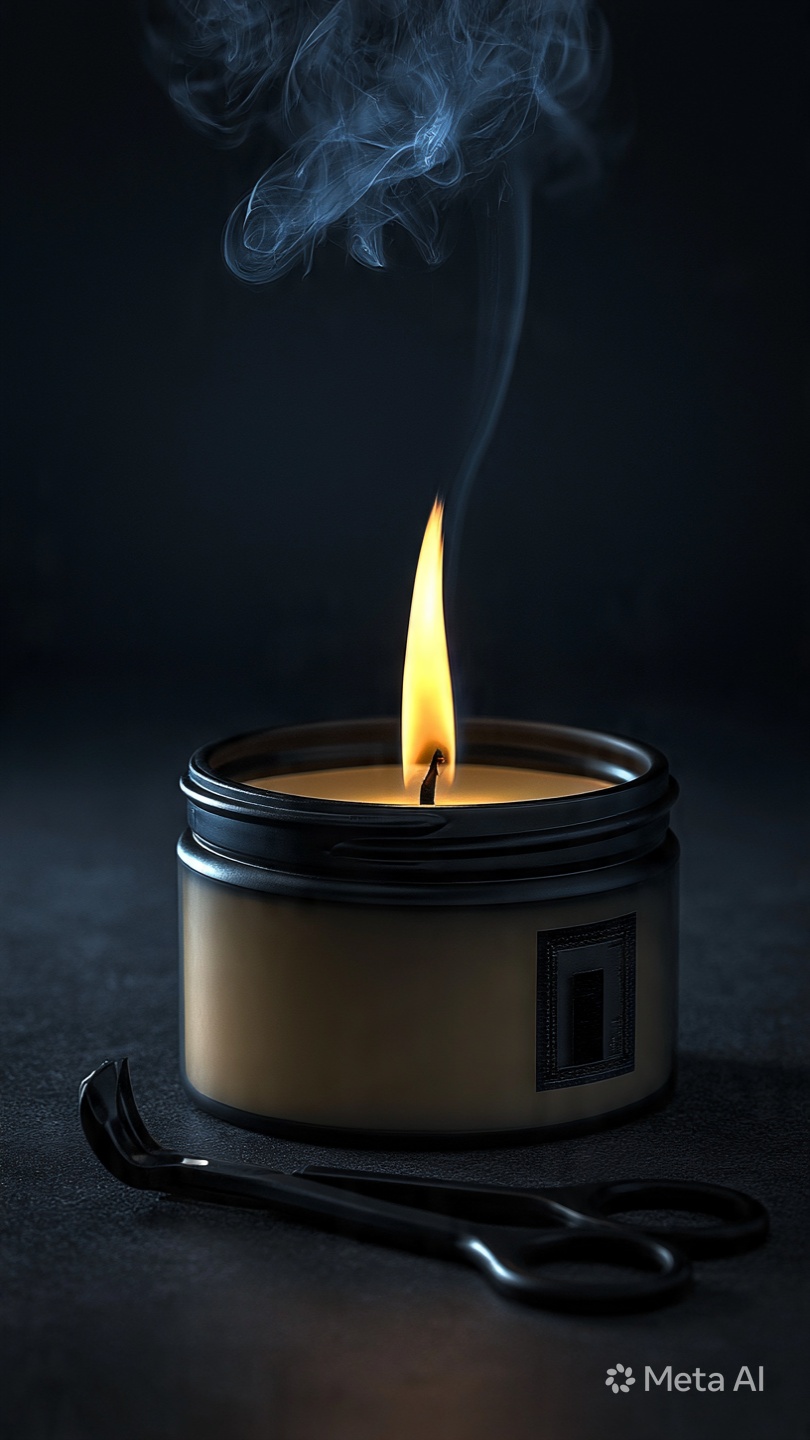
A thin trail of black smoke curling up from your candle, sooty deposits forming inside your favorite jar, a faint acrid smell cutting through what should be a pleasant scent — candle smoking is one of those problems that goes from minor annoyance to genuine concern quickly. And understandably so. Black soot stains jar interiors, marks walls and ceilings above the candle, and raises reasonable questions about what exactly is being released into the air.
The encouraging truth is that candle smoking is one of the most preventable and correctable problems in both candle use and candle making. It follows a clear physical logic, and addressing it requires no special tools or products — just an understanding of what's happening at the flame and one or two simple habits applied consistently.
The 3 Main Culprits Behind Candle Smoke and Soot
All candle smoke is a product of incomplete combustion. A candle flame works by vaporizing liquid wax and burning that vapor. When the combustion is complete, the byproducts are carbon dioxide and water — both invisible. When combustion is incomplete, unburned carbon particles are released as black smoke and deposit as soot on nearby surfaces. Three conditions reliably cause this incomplete burn.
1. An Untrimmed Wick
This is the cause of candle smoking in the overwhelming majority of cases, and the fix takes five seconds. A wick that is too long draws more liquid wax up its fibers than the flame can fully combust. The excess fuel feeds the flame but doesn't burn cleanly — instead, it produces a large, flickering, carbon-rich flame that throws off visible black smoke. You can often identify an over-long wick by the flame itself: it will appear tall, unsteady, and may develop a mushroom-shaped carbon deposit at the tip, called a "mushroom" or "carbon bloom," which further accelerates sooting with each passing minute.
The correct wick length before every single lighting is ¼ inch (6mm) for cotton wicks. If you're burning a wooden wick candle — increasingly common in modern candle making — trim to ⅛ inch (3mm), as wood wicks operate at a lower, wider flame profile and need even less length to burn cleanly. Trim before the first burn and before every subsequent burn without exception, using a proper wick trimmer, nail clippers, or sharp scissors.
2. Excessive Fragrance Load
Fragrance oils are not pure combustibles in the way that wax is. They contain aromatic compounds, carrier oils, and other components that have varying flash points and combustion behaviors. When a candle's fragrance load exceeds what the wax can fully bind and combust, the unbound fragrance oil essentially feeds the flame as a separate, uncontrolled fuel source — one that doesn't burn as cleanly as wax vapor. The result is visible smoke, erratic flame behavior, and often a dark, oily soot deposit inside the jar rather than the dry black carbon soot caused by wick length issues.
Candle makers should also be aware that high fragrance loads can cause the oil to "sweat" to the surface of the wax, particularly in warmer environments. This pooled surface oil ignites unevenly and contributes directly to smoking and flare-ups during the early minutes of a burn.
3. Air Drafts Disrupting the Flame
A candle flame burns cleanly when it is stable and upright. When a draft pushes the flame sideways or causes it to flicker rapidly, the combustion zone becomes turbulent — fuel and oxygen mix unevenly, and the result is incomplete burning and visible smoke. The flame can appear to "puff" smoke in bursts rather than producing a continuous stream, which is a reliable visual indicator of draft interference rather than a wick or fragrance problem.
Common draft sources near candles include ceiling fans, HVAC vents, open windows, air purifiers, and the natural convective airflow created by people moving through a room. A candle that smokes only occasionally, in short bursts, with an otherwise normal flame, is almost always experiencing intermittent draft exposure rather than a structural wick or wax issue.
How to Stop Candle Sooting Immediately
If your candle is actively smoking right now, these steps will stop it within minutes.
Step 1 — Extinguish the flame. Do not blow the candle out — blowing forces a puff of unburned wax vapor and carbon into the air and leaves a smoke trail. Instead, use a candle snuffer to starve the flame of oxygen cleanly, or dip the wick into the melt pool using a wick dipper and then straighten it — this extinguishes the flame with zero smoke and coats the wick in fresh wax for a cleaner relight.
Step 2 — Allow the wax to cool for 2 minutes, then trim the wick to ¼ inch for cotton or ⅛ inch for wood. Remove all trimmings from the wax pool — carbon debris left in the melt pool will be drawn back up the wick on the next burn and contribute to sooting immediately.
Step 3 — Identify and remove any draft source before relighting. Move the candle away from vents, close nearby windows, or reposition it at least 12 inches from any fan or air movement source.
Step 4 — Relight and observe. A properly trimmed wick in a still environment should produce a steady, teardrop-shaped flame with no visible smoke trail after the first 20–30 seconds of burn time. Some smoke on the initial light is normal as the wick and wax come up to temperature — it's persistent smoking during the burn that indicates a remaining problem.
Invest in a quality wick trimmer — the long-handled, angled design allows you to reach into deep jars cleanly and collect the trimmed wick end rather than dropping it into the wax. They cost under $10 and are one of the highest-return candle accessories available. A snuffer, similarly, eliminates the blow-out smoke trail that leaves black deposits on jar rims and nearby surfaces with every extinguishing.
Fragrance Load Safety: Why More Is Not Better
The persistent belief among both candle makers and consumers is that a higher fragrance load means a stronger, better scent throw. This is only partially true, and past a certain threshold it becomes actively false — and a direct cause of smoking.
Every wax has a maximum fragrance load — the upper limit of fragrance oil it can fully absorb, bind, and combust. For most container soy waxes, this ceiling is between 6% and 10% fragrance by weight. For paraffin, it ranges from 6% to 12% depending on the specific formulation. These are not arbitrary guidelines — they reflect the physical chemistry of how much aromatic compound the wax's molecular structure can hold in stable suspension.
Exceeding the maximum fragrance load doesn't produce a proportionally stronger scent — it produces a candle that smells approximately the same as one made at the correct load, but also smokes, pools surface oil, clogs the wick over time, and may cause fragrance "seeping" that creates a fire hazard if pooled oil ignites. The sweet spot for most candle makers targeting strong cold and hot throw is 8–10% for soy and 8–12% for paraffin — precise enough to maximize scent without crossing into combustion instability.
Always weigh fragrance oil on a digital scale rather than measuring by volume. Fragrance oils have different densities, and a tablespoon of one oil will not weigh the same as a tablespoon of another. Volume measurements introduce enough variability that it's easy to accidentally exceed your target load without realizing it.
Frequently Asked Questions
Is candle soot bad for you?
The soot produced by a candle that is smoking due to an untrimmed wick, excessive fragrance load, or draft exposure consists primarily of fine carbon particles — the same class of particulate matter produced by any incomplete combustion source. Occasional, brief exposure in a well-ventilated room is not considered a significant health risk for most people. However, chronic exposure to candle soot in a poorly ventilated space — especially from candles that are consistently smoking — is worth taking seriously, particularly for people with asthma, respiratory sensitivities, or young children in the household. The black deposits you see accumulating inside a jar or on a nearby wall represent real particulate matter that was airborne before settling. The practical response is not to stop burning candles but to trim wicks consistently, eliminate drafts, and ensure adequate room ventilation — the three habits that prevent smoking in the first place. A properly burning candle with a trimmed wick in a still environment produces minimal soot and poses no meaningful air quality concern for healthy individuals.
Why does my candle smoke when I blow it out?
Blowing out a candle pushes a concentrated burst of air through the flame, extinguishing it before the vaporized wax at the wick tip can fully combust. That unburned wax vapor, along with carbon particles from the wick, exits as the visible white-and-black smoke trail you see curling up after extinguishing. The longer and hotter the wick, the more pronounced this smoke trail will be. This is why candle care professionals universally recommend using a snuffer or wick dipper instead of blowing. A snuffer starves the flame of oxygen from above rather than blasting it with forced air, which allows the combustion to wind down rather than cut off abruptly — producing little to no smoke trail. If you don't have a snuffer, holding your finger in front of the flame and blowing against your finger so the air deflects gently across the flame — rather than directly into it — produces significantly less smoke than a direct blow, as a lower-velocity air disturbance gives the flame more time to extinguish gradually.
Candle smoking is one of the few problems in candle making that responds almost immediately to the right intervention. Trim the wick, respect the fragrance ceiling, find a draft-free home for your candles, and use a snuffer when you're done — and you'll likely never see a meaningful smoke trail again.