Walk into any craft store or scroll through a candle-making community online and you'll find makers using everything from vintage teacups to repurposed pasta sauce jars. The aesthetic appeal is obvious — and in most cases, the candle works fine right up until the moment it doesn't. Container failure in a candle context doesn't mean a slow leak or a bent lid. It means cracked glass, spilled molten wax, and a flame with no container left to contain it.
Choosing the right vessel is not an aesthetic decision dressed up as a safety one. It is a straightforward engineering question: can this container withstand repeated thermal cycling without structural failure? The answer depends on the glass composition, manufacturing process, and whether the container was designed for heat exposure in the first place. This guide gives you the framework to answer that question for any container you're considering — and a clear comparison of the three container categories that actually meet the standard.
Why Regular Glass Is a Hazard for Candle Making
The term "regular glass" covers an enormous category: drinking glasses, wine glasses, repurposed food jars, decorative vases, vintage teacups, and the vast majority of containers not specifically engineered for heat. What unites them is the absence of one critical manufacturing step: controlled thermal stress testing and, in most cases, adequate annealing for cyclical heat exposure.
All glass expands when heated and contracts when cooled. The risk is not the expansion itself — it's differential expansion, where one part of the glass heats or cools faster than another. In a drinking glass used as a candle vessel, the base may sit in pooled hot wax at 150°F while the rim sits at room temperature. That temperature gradient creates internal tensile stress across the glass. If the stress exceeds the glass's tensile strength at any point — including at a microscopic scratch, chip, or manufacturing imperfection — the glass fractures. This is thermal shock, and it can happen silently and suddenly, without the container appearing compromised beforehand.
ASTM F2179 is the industry standard that governs candle container performance. It defines requirements for thermal shock resistance, leakage under heat, and structural integrity under sustained flame conditions. Containers that comply with ASTM F2179 have been tested to confirm they will not fail under the thermal loads typical of candle use. No drinking glass, repurposed food jar, or decorative vessel has been manufactured to meet this standard — because none of them were designed for candle use. Their glass formulations, wall thicknesses, and annealing processes are calibrated for their actual intended application, not for sustained heat from an open flame.
The additional risk with thin-walled glass — common in drinking glasses and decorative containers — is that less material means less thermal mass and faster, more extreme temperature gradients across the wall. A thick-walled canning jar distributes heat more evenly through its cross-section. A thin wine glass concentrates it at the surface instantly. The result is a container that is structurally more vulnerable to exactly the conditions candle burning creates.
Top 3 Container Types for Candle Making: Reviewed
Jelly Jars: The Hobbyist Favorite
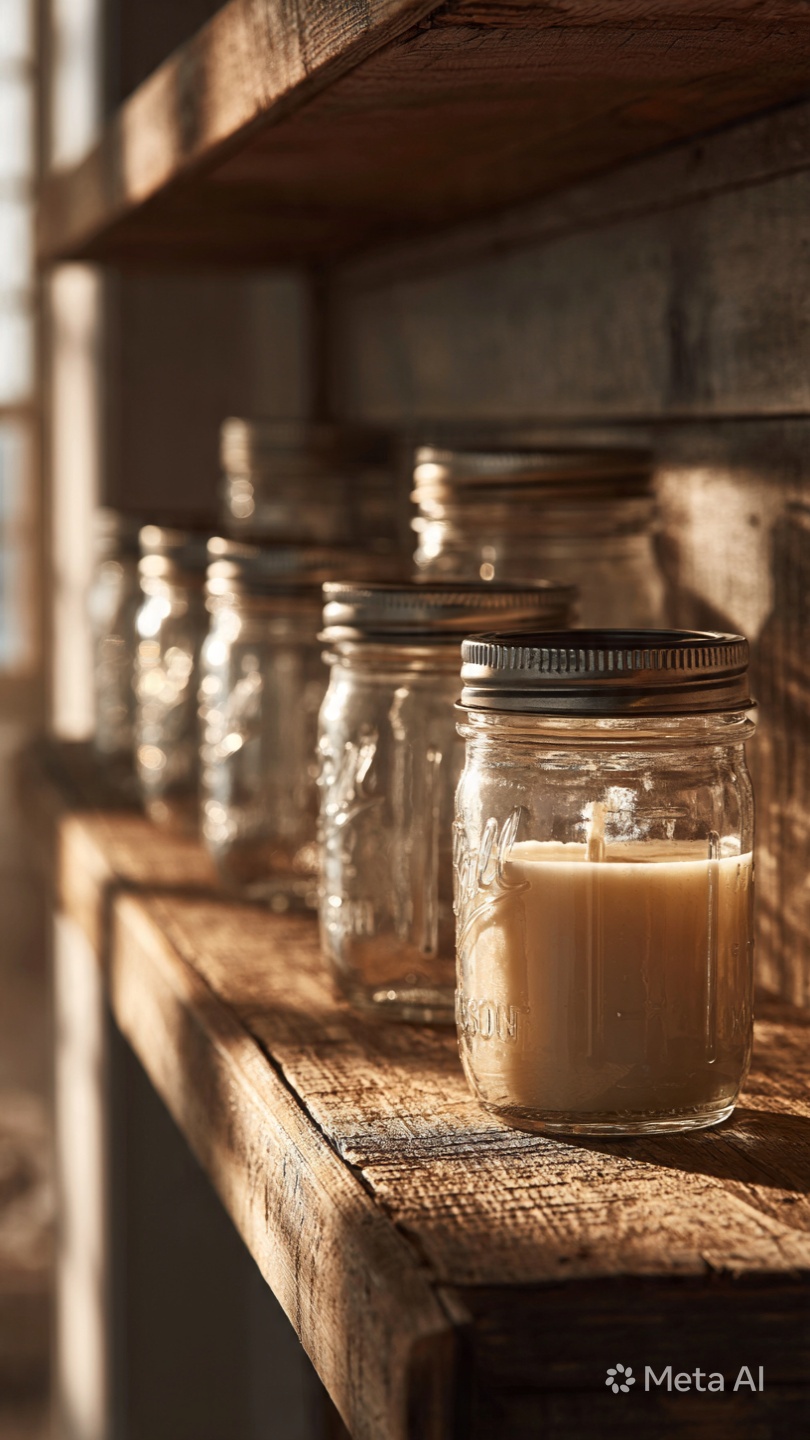
Jelly jars — the small, typically 4 oz to 8 oz mason-style jars sold by Ball, Kerr, and equivalent canning brands — are the entry point for most candle makers, and for good reason. They are inexpensive, widely available, manufactured to canning-grade annealing standards, and sized appropriately for single-use or small-batch candles. The same thermal engineering that makes them reliable for home canning — withstanding rapid temperature changes during the canning process — translates directly to candle use.
The primary limitation of jelly jars is aesthetic range. They come in a small number of standard shapes and sizes, and their utilitarian look is a deliberate part of the handmade candle aesthetic — which suits some brands perfectly and constrains others. For hobbyists, cottage industry makers, and anyone prioritizing reliability over brand differentiation, jelly jars are an excellent, well-documented choice with decades of track record in candle making.
The critical caveat — consistent with the previous article in this series — is to buy genuine canning jars from established brands with embossed identification, not decorative mason-style lookalikes sold as home décor. The latter are not manufactured to the same standard and should not be used for candles regardless of visual similarity.
Status Jars: The Professional Choice
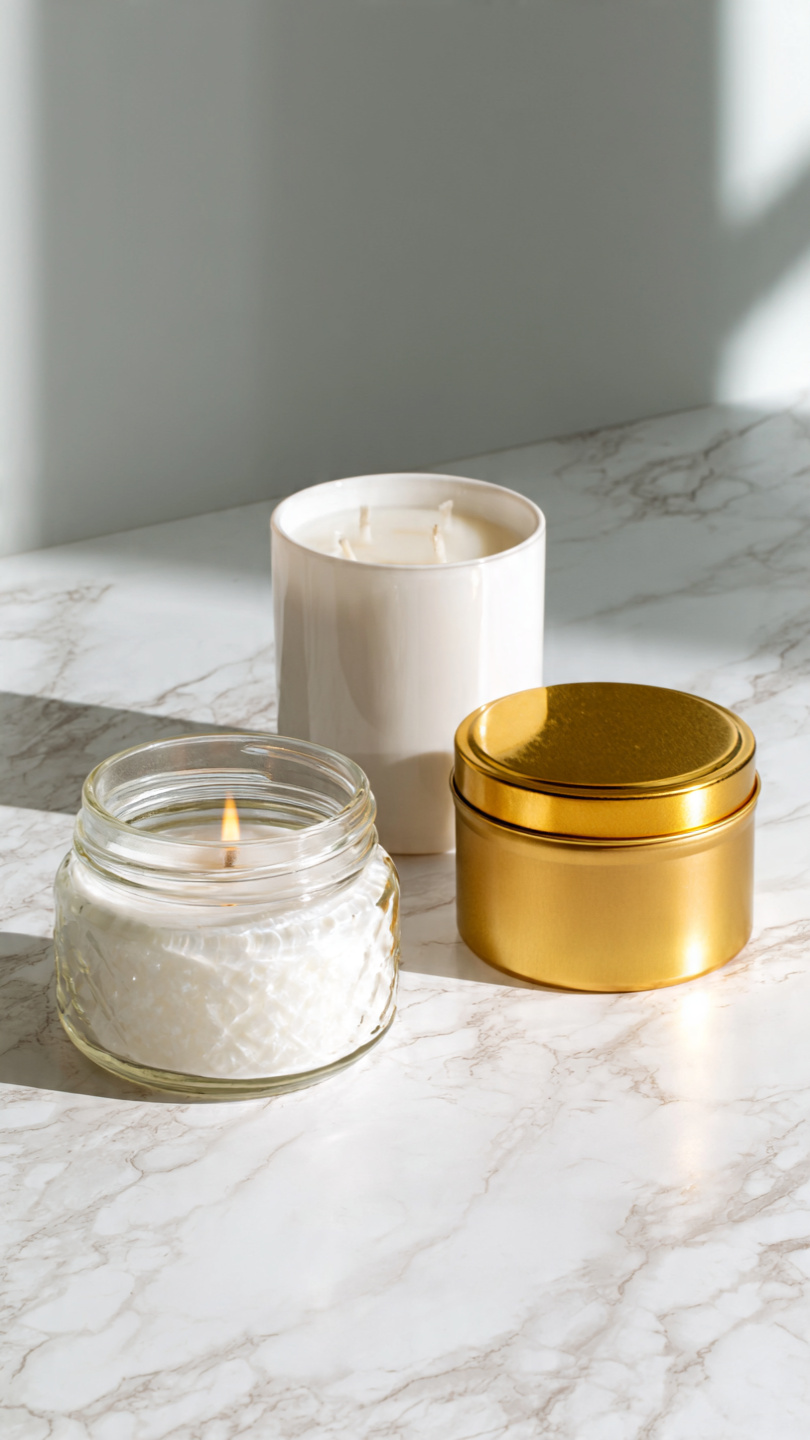
Status jars — a category of premium glass vessels sold specifically and exclusively for candle making — are what most professional and semi-professional candle makers graduate to once they're scaling beyond hobbyist production. These include straight-sided apothecary jars, thick-walled amber glass vessels, geometric faceted jars, and the sleek cylindrical glass containers you'll recognize from mid-to-high-end candle brands at retail.
What distinguishes status jars from jelly jars is not safety — both are manufactured for heat exposure — but rather the deliberate design investment that goes into their aesthetics. Status jar manufacturers understand that the container is part of the product experience: the weight of the glass in the hand, the visual impression on a shelf, the compatibility with premium branding. These jars are typically made from thicker glass, which provides additional thermal mass and a more substantial feel, and they are purpose-built for candle use, meaning their dimensions, neck widths, and base proportions are optimized for wick placement, melt pool behavior, and tunneling prevention.
The trade-off is cost. Status jars can run three to ten times the per-unit price of jelly jars, which has significant implications for pricing, margin, and minimum order quantities at scale. For makers whose brand positioning justifies a premium container, the investment is straightforward. For those still developing their market or testing formulations, starting with jelly jars and transitioning to status jars for hero SKUs is a practical approach.
Metal Tins: The Zero-Shatter Alternative
Candle tins — typically made from tinplate steel in round, square, or travel configurations — occupy a distinct category because they eliminate the thermal shock risk entirely. Metal does not shatter. A tin that fails under heat will deform before it fractures, giving visible warning rather than sudden failure. For makers who want maximum structural safety, tins are the unambiguous answer.
Beyond safety, tins offer practical advantages. They are lightweight, making them significantly cheaper to ship — an important consideration for e-commerce candle businesses. They are opaque, which eliminates the wet spot and visual wax imperfection concerns that glass candle makers contend with. They are available in travel-friendly sizes that command premium positioning as gift or lifestyle products. And for soy wax specifically, the conductive properties of metal can produce a more even melt pool than glass in some formulations.
The limitations are the flip side of their advantages: opacity means customers cannot see the candle inside, which removes one of the visual selling points of glass vessels, and metal can develop cosmetic rust or discoloration if moisture is present during storage. Tins also tend to run hotter on exterior surfaces than glass, which requires adequate heat-warning labeling for consumer products.
How to Identify Heat-Safe Glass When Buying in Bulk
When sourcing containers in quantity — from wholesale suppliers, import catalogs, or trade shows — the challenge is evaluating glass safety without being able to conduct thermal testing yourself. These are the practical indicators to apply at the buying stage.
- Request ASTM F2179 compliance documentation. Any reputable candle container supplier should be able to provide documentation or a written statement confirming their glass vessels meet or have been tested against ASTM F2179. If a supplier cannot produce this documentation and cannot explain their testing protocol, that is a disqualifying indicator. Price alone should never substitute for this confirmation.
- Assess wall thickness consistently across the vessel. Inspect sample jars under a strong light source. Walls should be uniformly thick throughout — base, sides, and shoulder. Any visible variation in light transmission through the glass indicates uneven wall thickness, which creates stress concentration points. Minimum wall thickness for reliable candle glass is generally accepted as 3mm; thicker is better.
- Check for existing stress fractures. Hold each sample jar up to strong backlighting and look for faint internal lines, cloudiness, or optical distortions that do not correspond to the jar's external surface. These can indicate existing stress fractures or manufacturing defects that make the glass a thermal shock risk even before it has ever been used.
- Confirm the base is flat and level. A jar base that rocks or is not perfectly flat will make uneven contact with work surfaces, concentrating thermal stress at specific contact points during both pouring and burning. Every jar in a bulk order should sit flat without rocking when placed on a level surface.
- Buy from candle-specific suppliers, not general glassware wholesalers. A general glassware supplier sells glass for many applications, most of which involve no heat exposure. A candle-specific supplier has curated their inventory for the thermal requirements of candle making. The category of supplier is not a guarantee of quality, but it significantly increases the likelihood that the glass you receive has been evaluated for candle use rather than repurposed from a different product line.
Frequently Asked Questions
Is regular glass safe for candle making?
No — with very limited exceptions, regular glass is not safe for candle making. Drinking glasses, wine glasses, decorative jars, and repurposed food containers are manufactured for their intended applications, none of which involve sustained heat from an open flame. They have not been annealed to withstand thermal cycling, have not been tested to ASTM F2179, and often have wall thicknesses and glass formulations that make them particularly vulnerable to thermal shock. The fact that a repurposed jar may have worked for several candle burns without incident does not mean it is safe — it means it has not yet experienced the stress conditions that will cause it to fail. Thermal shock failure in glass is not gradual and predictable; it is sudden. The only regular glass category that partially bridges this gap is genuine canning jars from established brands like Ball and Kerr, which are manufactured to withstand thermal stress for canning applications and have a documented track record in candle making — but even these should be inspected before every use and are not ASTM F2179 certified for candle use specifically.
Are tins better than glass for candles?
It depends entirely on what "better" means in context. On pure structural safety, tins are superior — metal cannot shatter, and thermal shock is not a failure mode for tinplate steel. On scent throw and visual presentation, glass has measurable advantages: it allows customers to see the candle, observe the melt pool, and engage with the product visually in ways that an opaque tin does not permit. On logistics and e-commerce economics, tins win again — they are lighter, cheaper to ship, and more resistant to breakage in transit. Most professional candle businesses use both, allocating tins to travel, gift, and value-tier products and glass to their core or premium lines. The question is not which material is objectively better but which material best serves the specific product, customer, and business context you are building for.
Container choice is one of the most consequential decisions a candle maker makes — not because the right answer is complicated, but because the wrong answer has real consequences. Use purpose-built vessels, verify thermal standards, inspect every jar before pouring, and the container becomes a permanent non-issue in your production process.