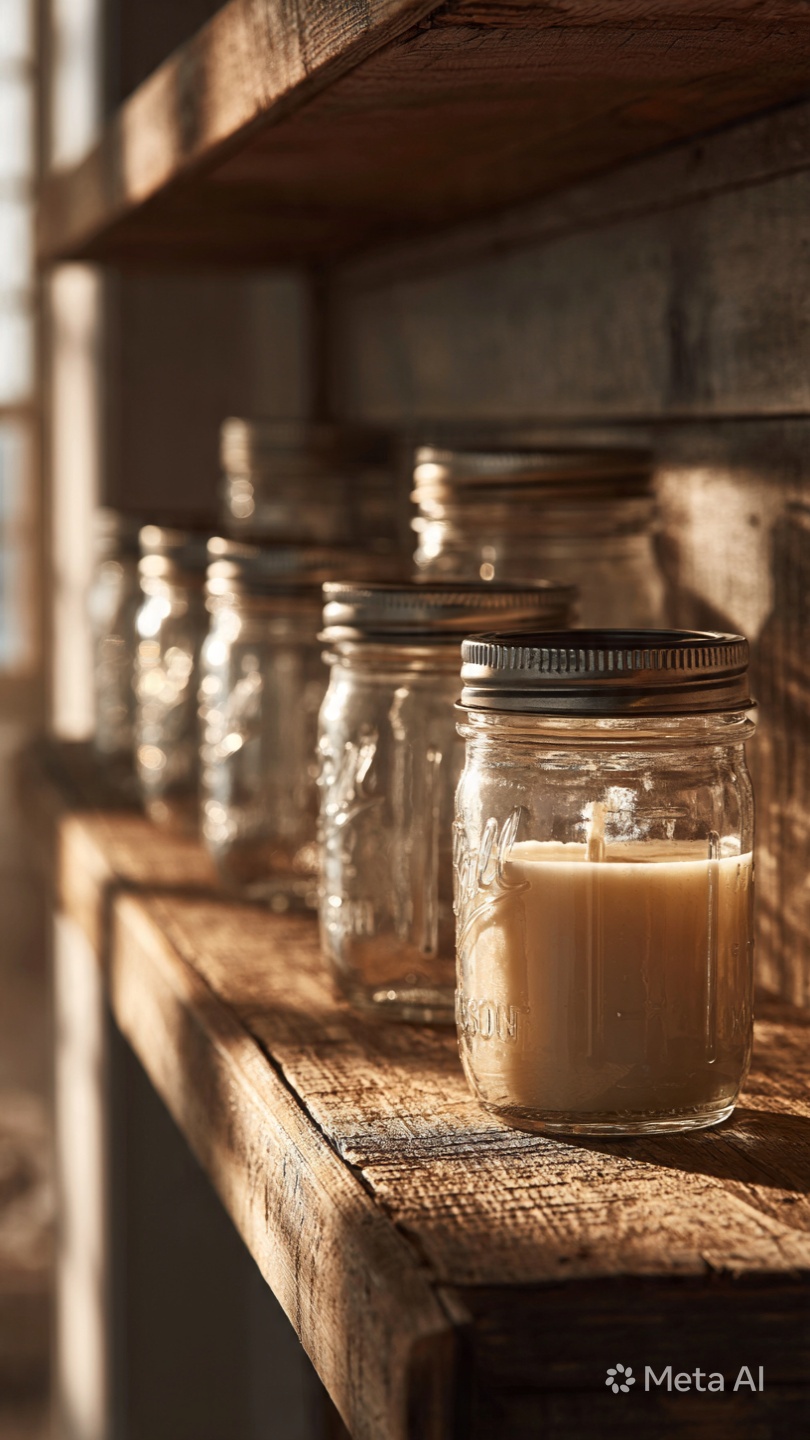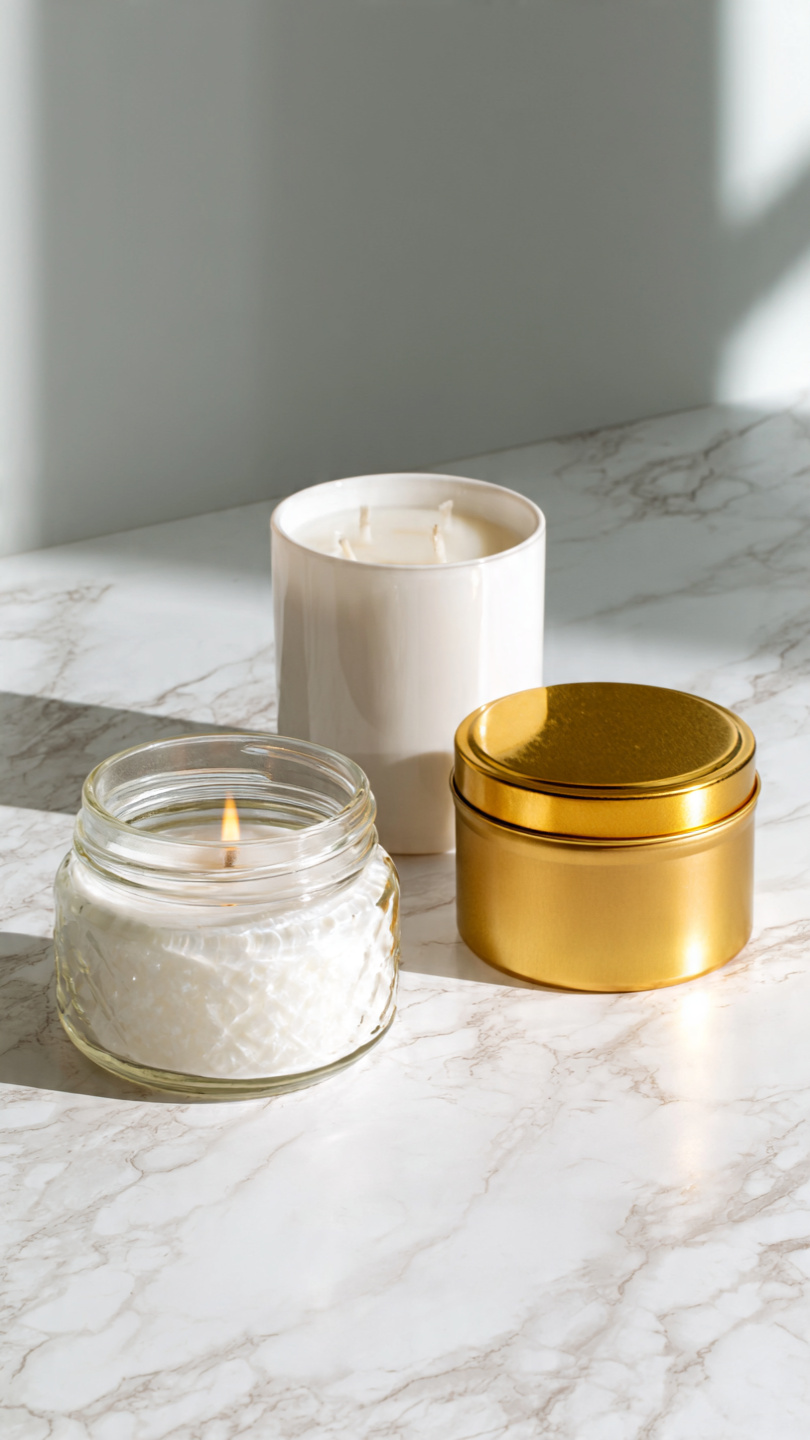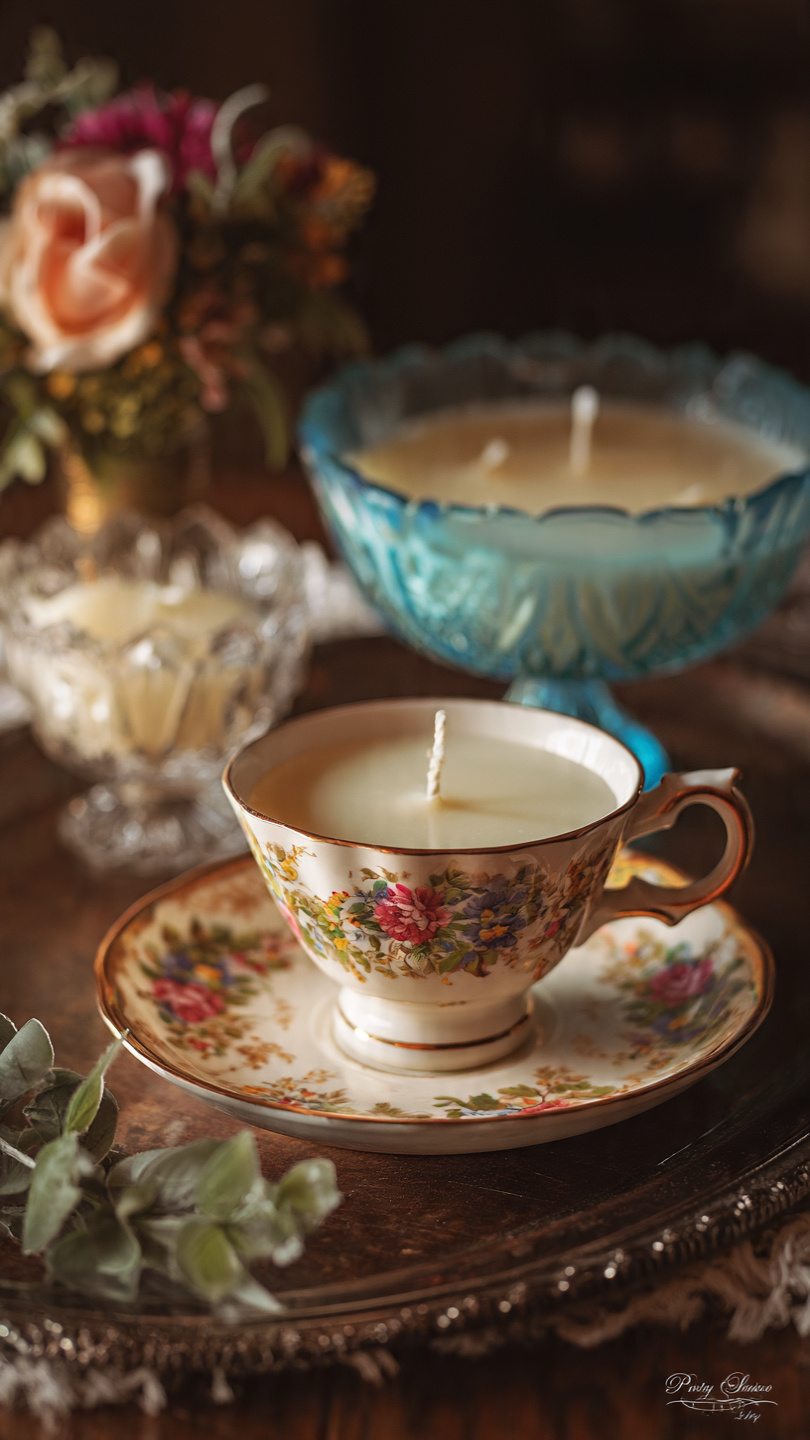
The vintage candle container aesthetic is genuinely compelling. An old apothecary bottle, a hand-painted ceramic crock, a grandmother's teacup — these objects carry history and character that no mass-produced candle vessel can replicate. It's no surprise that the "pour candles in thrifted containers" trend has a devoted following in crafting communities, with beautiful results shared across social platforms daily.
What those posts rarely show is the testing process that should precede the pour — or the incidents that occur when it doesn't. Container failure with vintage vessels is not merely a cosmetic problem. It can involve cracked and leaking ceramics, sudden glass fracture from hidden micro-cracks, and — in the case of painted or glazed interiors — the release of toxic compounds directly into the air above a burning candle. Understanding why these risks exist and how to evaluate them is the difference between a charming handmade candle and a genuine hazard.
The 3 Hidden Dangers in Vintage Candle Containers
1. Lead and Heavy Metal Contamination in Vintage Glazes
This is the danger most makers underestimate because it is invisible, odorless, and produces no immediate warning sign. Before the 1970s — and in some international manufacturing contexts well into the 1990s — ceramic glazes routinely contained lead compounds as a fluxing agent. Lead oxide lowers the melting point of the glaze, produces a smooth, glossy surface, and was inexpensive and effective. It was also poorly regulated, and the ceramics produced during this era — including decorative crocks, hand-painted plates, mugs, vases, and storage jars — may contain lead concentrations that are dangerous when disturbed.
In cold storage or display use, lead in a stable glaze poses minimal risk. In candle use, it faces a fundamentally different set of conditions: sustained heat from the flame, convective air currents above the candle drawing air across the interior surface, and in some cases direct flame proximity to decorated interior walls. Glazes that are beginning to craze — developing fine surface cracks from age and thermal cycling — release particulates into the air above the candle with each burn. In a lead-containing glaze, those particulates carry lead.
There is no visual way to identify whether a vintage ceramic contains lead. A beautiful, intact, apparently perfect glaze may contain significant lead concentrations. The only reliable method of identification is a lead test swab — inexpensive chemical test kits available at hardware stores and online that produce a color change in the presence of lead compounds. Testing the interior surface of any vintage ceramic before candle use is not optional — it is the baseline minimum for responsible practice. A positive test result is an unconditional disqualification from candle use, regardless of how attractive the container is.
Lead is not the only concern in vintage glazes. Cadmium compounds were used to produce red and orange colors in ceramics through much of the 20th century. Barium, antimony, and cobalt compounds appeared in other colorways. Any vintage ceramic with vivid interior coloration — particularly reds, oranges, and yellows — warrants extreme caution and ideally professional XRF (X-ray fluorescence) testing if lead swabs are not sufficient reassurance.
2. Micro-Cracks and Hidden Structural Damage
Every thrifted and vintage container has a use history you cannot fully reconstruct. It may have been dropped, thermally shocked, stored improperly, or subjected to stress concentrations from years of heavy items pressing against it in storage. The damage from these events is often not visible to the naked eye — it lives in the glass or ceramic matrix as a micro-crack: a fracture that has not yet propagated to the surface but has already compromised the structural integrity of the material at that point.
Micro-cracks respond to thermal stress by propagating. The sustained, cyclical heat of candle burning is precisely the kind of repeated thermal loading that encourages crack propagation. A container that looks and feels perfectly sound can develop a full fracture over the course of one or several burn cycles as the micro-crack extends under thermal fatigue. In glass, this failure is typically sudden — a crack line propagates across the container rapidly, sometimes audibly, and the vessel fails. In ceramics, the failure mode is often a slow leak of molten wax through a propagating crack, which can reach a heat source and ignite.
3. Porosity in Unglazed and Under-Glazed Ceramics
Fired clay is a porous material. The degree of porosity depends on the clay body, firing temperature, and glaze coverage. Earthenware — the most common material in inexpensive, decorative, and vintage ceramics — fires at relatively low temperatures and retains significant porosity even after glazing, particularly at unglazed bases and any interior areas where the glaze is thin or craized. Stoneware and porcelain fire at higher temperatures and are significantly denser, but are not immune to porosity issues at imperfections or unglazed surfaces.
Porosity in a candle vessel is a problem for two reasons. First, liquid wax can wick into porous ceramic walls over the course of a burn, saturating the material over time and creating a combustible reservoir within the container walls themselves. Second, porous ceramics with moisture retained from prior use or humidity can develop steam pressure when heated — particularly at the base of the vessel where the flame's heat is most concentrated — contributing to sudden cracking. Any vintage ceramic with an unglazed base, a visibly textured or rough interior surface, or crazing across the glaze surface should be considered potentially porous and treated accordingly.
Testing Thrifted Containers Before You Pour
No home test can replicate the full thermal stress testing of ASTM F2179 certification, but a structured evaluation process can identify the most dangerous containers before they reach your workshop.
Step 1 — Lead test first, always. Before any other evaluation, apply a lead test swab to the interior surface of any vintage ceramic or painted container. Follow the manufacturer's instructions precisely — most require a light abrasion of the surface before swabbing to access below the top oxidation layer. A positive result (typically a color change to red or pink depending on the brand) ends the evaluation. Do not pour into this container under any circumstances.
Step 2 — Visual inspection under strong light. Hold the container under a strong directional light — a bright flashlight or examination lamp — and rotate it slowly. Look for any lines, shadows, or optical distortions on the interior or exterior surface that could indicate existing cracks. In glass, look for faint internal lines that don't correspond to the external surface. In ceramics, look for crazing in the glaze — a fine network of surface cracks — particularly concentrated in any one area, which can indicate stress concentration.
Step 3 — The thermal shock test. This is the only home method that approximates a functional safety test. Fill the container with hot — not boiling, but hot tap water at approximately 140°F. Allow it to sit on a room-temperature surface for five minutes, then pour out the water and immediately refill with cold water. Listen and feel for any cracking sound or vibration during either fill. Inspect immediately after for any new crack lines. This test does not certify the container as safe, but it does identify the most structurally compromised vessels before wax is involved. Perform this test outdoors or in a sink, and wear eye protection.
Step 4 — Assess wall thickness and base coverage. A minimum wall thickness of 3mm is the practical standard for candle glass. Ceramic walls should feel substantial and even. Any container that feels thin, lightweight for its size, or has visible variation in wall thickness should be set aside.
When to Say No: Containers to Never Use for Candles
- Any container with a painted or decorated interior surface. Interior decoration — whether painted, decoupage, or applied — sits directly in the combustion zone. Heat and wax contact will degrade the decoration, and the compounds released depend entirely on the paint or adhesive chemistry, which is unknowable without laboratory analysis.
- Thin-walled teacups and fine china. Fine china and bone china are engineered for delicacy, not thermal stress. Wall thicknesses of 1–2mm, decorative glazes applied over lead-containing base glazes in vintage pieces, and shapes not designed to contain heat make these a categorical no.
- Any ceramic that has tested positive for lead. There is no mitigation measure, sealant, or workaround that makes a lead-positive ceramic safe for candle use. Discard or repurpose the container for cold use only.
- Containers with visible crazing across interior glaze surfaces. Crazing indicates existing micro-fractures in the glaze layer and often in the ceramic body beneath. It also indicates porosity — the crazed glaze no longer forms a continuous seal against the clay body, meaning wax can penetrate.
- Any vintage container you cannot identify by maker, age, or material. Unknown provenance means unknown glaze chemistry, unknown clay body, and unknown use history. The aesthetic appeal of mystery objects does not offset the risk profile of genuinely unknown materials in a heat application.
- Metal containers with interior enamel or lacquer coatings. Enameled metal containers — particularly vintage kitchenware — can contain lead in the enamel layer and will volatilize coating compounds under sustained heat. Bare tinplate or stainless steel is appropriate for candles; coated vintage metal is not.
Frequently Asked Questions
Are ceramic mugs safe for candles?
Modern ceramic mugs from reputable manufacturers — commercial stoneware or porcelain produced after roughly 2000 — are generally safer candidates than vintage ceramics, as lead in glazes has been broadly phased out of consumer tableware in most markets. However, "safer" is not the same as "safe for candle use." Mugs are engineered for hot beverage use, not for the sustained thermal cycling of candle burning over many hours and multiple burn sessions. The base of a mug in candle use becomes significantly hotter than it ever does with a beverage, and mug walls — particularly at the handle junction — contain stress concentration points not present in purpose-made candle vessels. If you are using a ceramic mug for candles, it should be modern, from a known manufacturer, lead-tested regardless of age, inspected for micro-cracks, and burned only on a heat-safe surface. Vintage mugs, hand-painted mugs, and mugs of unknown origin should be disqualified.
Are thrift store dishes safe for candles?
As a category, no — and the honest answer is that this should be the default position until a specific item passes every evaluation step in the testing protocol above. Thrift store inventory has unknown provenance, unknown use history, and unknown manufacturing standards. The proportion of thrift store ceramics that are vintage enough to potentially contain lead glazes is significant — anything that looks genuinely old or was manufactured before the 1990s in an unregulated market is a candidate. Beyond chemistry, the physical condition of thrifted items is inherently variable: items reach thrift stores because they are no longer wanted, which sometimes means they have been dropped, damaged, or stressed in ways not visible on inspection. The practical guidance is to apply the full testing protocol to any thrifted item you are seriously considering, disqualify any positive lead test or failed thermal shock test without exception, and when in genuine doubt — choose a purpose-made candle vessel instead. The cost difference is rarely as significant as it seems when weighed against the risk profile of an unknown container.
Vintage containers can be beautiful and, after rigorous evaluation, occasionally safe. But the evaluation is not optional, and the disqualification criteria are not negotiable. The aesthetic value of a thrifted find never outweighs the responsibility of putting a safe product into the world — or into your own home.