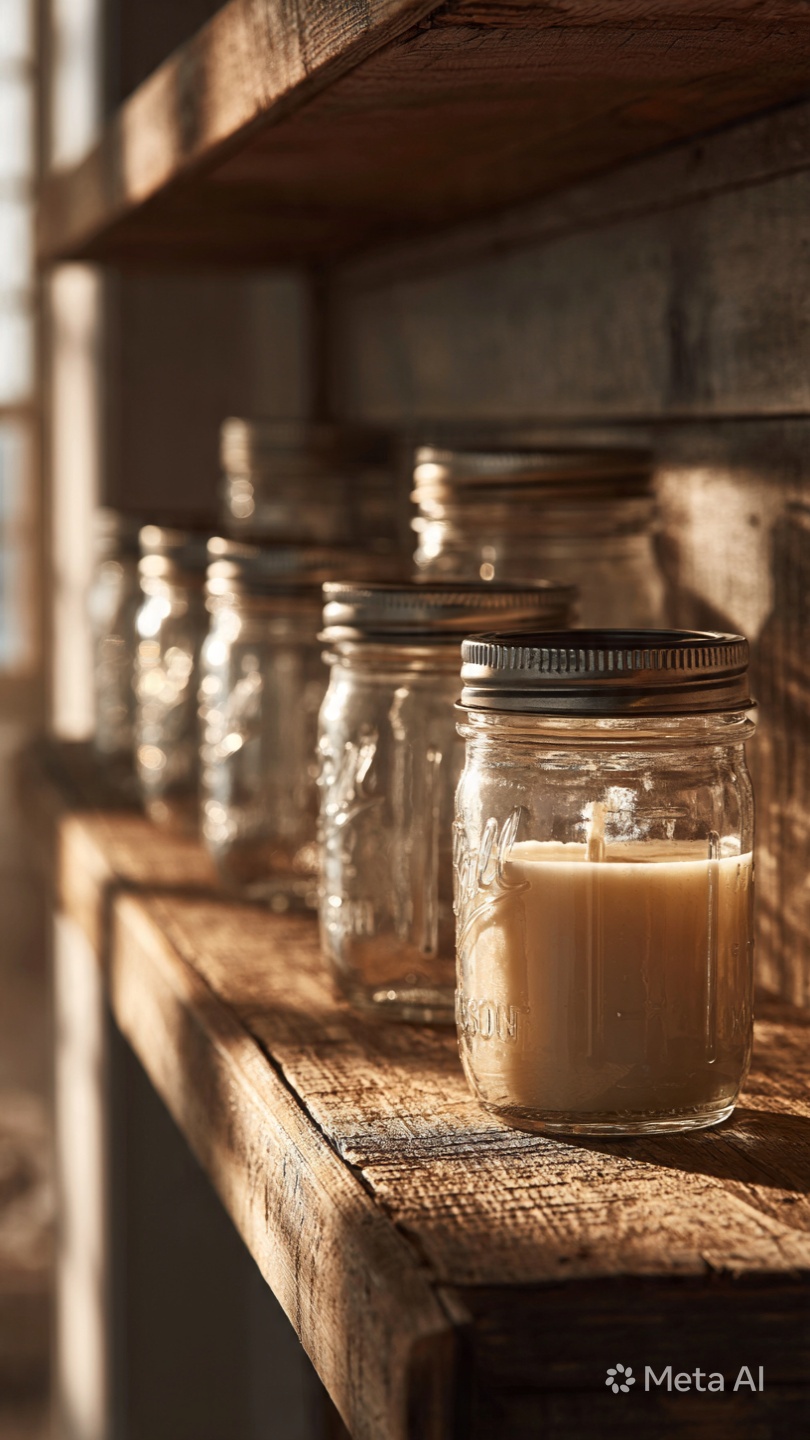
Mason jars and candles are practically synonymous with a certain kind of handmade aesthetic — rustic, warm, approachable. Search any candle-making community and you'll find thousands of makers who use Ball and Kerr jars as their primary vessel, batch after batch, without incident. You'll also find cautionary accounts of jars cracking mid-burn, shattered glass, and wax spills. Both groups are telling the truth. The difference, in almost every case, is whether they used a genuine canning jar or a lookalike.
This is not a stylistic distinction. It is a structural and chemical one — and understanding it could prevent a house fire.
The ASTM F2179 Standard: What It Means for Glass and Heat
ASTM F2179 is the standard published by ASTM International that governs the performance requirements for candle containers. It addresses a range of properties including leakage, flame height, and — critically — thermal shock resistance. A container that meets ASTM F2179 must be able to withstand the repeated thermal cycling that candle burning creates without cracking, fracturing, or failing structurally.
The reason this matters comes down to the physics of glass under heat. Most consumer glass is made from soda-lime glass — a formulation of silica, sodium oxide, and calcium oxide that is inexpensive to produce and adequate for most everyday applications. The problem with soda-lime glass in candle applications is its relatively high coefficient of thermal expansion: when heated, it expands measurably, and when cooled, it contracts. If different parts of the same glass object heat or cool at different rates — say, the base sitting in pooled hot wax while the rim stays at room temperature — those differential expansion and contraction forces create internal stress that can exceed the glass's tensile strength, causing it to crack or shatter. This is called thermal shock.
What separates genuine canning jars from ordinary decorative glass is a manufacturing process called annealing. After the glass is formed, canning jars are passed through a controlled cooling tunnel that slowly and evenly reduces the glass temperature over a precise time period. This process relieves the internal stresses that form during manufacturing, producing glass with a more uniform molecular structure that is significantly more resistant to thermal shock. Ball and Kerr jars are engineered specifically to withstand the repeated heating and cooling cycles of canning — which, in thermal terms, is not dramatically different from candle use. That engineering is what makes them a legitimate candle vessel when used correctly.
Decorative mason-style jars — the kind sold in home goods stores for $3 each as storage or centerpiece containers — are typically made from unannealed or minimally annealed soda-lime glass. They may look identical to a genuine Ball jar. They are not structurally equivalent, and they have not been tested to any thermal performance standard.
Canning Jars vs. Decorative Jars: How to Tell the Difference
The most important skill a mason jar candle maker can develop is the ability to distinguish a genuine canning jar from a decorative lookalike. The visual similarities are intentional — decorative jar manufacturers design their products to look like canning jars because of the aesthetic appeal. Here is how to tell them apart reliably.
Check the Brand Embossing
Authentic Ball and Kerr canning jars have the brand name embossed directly into the glass — raised lettering that is part of the jar's structure, not a label or sticker. Look for "Ball", "Kerr", or "Ball Mason" embossed on the side or base of the jar. The presence of a brand sticker with a mason jar aesthetic but no embossing is a strong indicator you're looking at a decorative product. Other legitimate canning jar brands include Golden Harvest and Bernardin (common in Canada) — all will have embossed brand identification.
Inspect the Glass Weight and Wall Uniformity
Genuine canning jars have consistent, substantial wall thickness — typically 3–4mm throughout. Decorative jars often have thinner walls overall and, more tellingly, uneven wall thickness that creates stress concentration points. Hold the jar up to a light source and look through the glass from the side — any visible waviness, inconsistency, or variation in the light transmission pattern indicates uneven glass thickness and potentially poor annealing. A genuine canning jar will appear relatively uniform throughout.
Look for Mold Seam Lines
Canning jars are produced in industrial molds with consistent specifications. The mold seam lines — the faint vertical lines running up the sides of the jar where the mold halves met — should be thin, even, and symmetrical. Decorative jars often show less precise seam lines, off-center bases, or subtle asymmetry in the rim, all indicators of lower-precision manufacturing.
Check the Lid Threading
Genuine Ball and Kerr jars use a standardized two-piece lid system — a flat lid and a screw band — with precise threading dimensions. The rim will be smooth, level, and consistent in height around the full circumference. Decorative jars may have cosmetically similar but dimensionally inconsistent threading and rims. A rim that isn't perfectly level concentrates stress at the high points during thermal cycling.
The Community Debate: Why Some Makers Use Them and Others Don't
In candle-making forums and communities, the mason jar safety question generates genuinely divided responses — and both sides are drawing on real experience. Makers who use genuine Ball jars routinely report years of trouble-free use across hundreds of candles. Makers who have experienced jar failures almost always — on closer examination — were using decorative lookalikes, had hairline cracks they didn't inspect for, or were placing finished candles on cold surfaces while the wax was still hot.
The makers who avoid mason jars entirely often cite a different concern: candle-specific vessels are tested and certified for the application, while canning jars are tested for canning. The thermal profiles are similar but not identical — canning involves brief high-heat processing, while candle burning involves lower but sustained heat over hours, often repeatedly. Some professional candle makers take the position that using a vessel for an application it wasn't certified for introduces a liability they prefer not to carry, regardless of how well the jar performs in practice.
Both positions are defensible. The honest answer is that genuine, inspected canning jars used correctly have an extensive track record of safe candle use — and that decorative lookalikes have an equally clear track record of failure.
5 Safety Checks Before Pouring Wax Into Any Mason Jar
- Check 1 — Verify brand authenticity. Confirm the jar is a genuine Ball, Kerr, or equivalent canning jar with embossed brand identification. If the brand identification is a label only, do not use it for candle making.
- Check 2 — Inspect for hairline cracks. Hold the jar up to a strong light source and rotate it slowly. Hairline cracks — even tiny ones invisible at normal viewing distances — are stress fractures that will propagate under thermal cycling. Any cracked jar should be discarded, not used. Run your fingertip lightly along the rim as well; a crack you can feel but not see is still a crack.
- Check 3 — Check for chips, especially on the rim. Chips at the rim or on the exterior surface of the jar create stress concentration points — locations where crack propagation is more likely to initiate under thermal stress. A chipped jar should be retired from candle use regardless of how minor the chip appears.
- Check 4 — Assess wall thickness consistency. Use the light-source inspection described above to check for uneven wall thickness. If you have a jar that feels unusually light for its size compared to other Ball jars you own, treat it with suspicion — reduced glass weight in the same form factor means thinner walls.
- Check 5 — Never place a hot jar on a cold surface. Even a thermally sound jar can be pushed into shock failure by placing a jar of hot wax directly onto a cold granite countertop, a tile floor, or a metal surface. Always set candles on a wooden board, a folded towel, or a room-temperature surface during and after pouring, and during the burn itself.
Frequently Asked Questions
Can Kerr jars be used for candles?
Yes — Kerr jars are manufactured by the same parent company as Ball jars (Newell Brands) and are produced to the same canning-grade specifications, including the annealing process that gives genuine canning jars their thermal stress resistance. A Kerr jar that passes the five pre-pour safety checks described above is as appropriate for candle making as a Ball jar of equivalent size. The same caveats apply: inspect for cracks and chips before every use, avoid placing hot jars on cold surfaces, and do not substitute decorative Kerr-branded products — which exist — for genuine Kerr canning jars. The embossed "Kerr" identification on the glass, combined with the standard two-piece lid system, is your confirmation of the genuine article.
Do mason jars crack from candle heat?
Genuine, annealed canning jars are very unlikely to crack from normal candle heat when used correctly. The thermal forces involved in a standard container candle burn — sustained heat in the range of 120–160°F at the glass walls — are well within the tolerance of properly manufactured canning glass. Cracking occurs when one of several failure conditions is met: the jar has a pre-existing hairline crack or chip that propagates under thermal stress; the jar is a decorative lookalike without proper annealing; the jar is placed on a cold surface while hot, creating rapid differential cooling; or the candle's wax pool burns so deep and hot that it exceeds the thermal tolerance even of sound glass — typically only a risk with extremely high-fragrance-load candles or oversized wicks in small jars. Control these variables, inspect your jars before use, and a genuine Ball or Kerr jar will serve reliably across many burn cycles.
The mason jar candle debate is ultimately a question of information, not opinion. Use the right jar, inspect it properly, and follow the basic thermal handling rules — and one of the most iconic candle vessels in the craft is also one of the safest.